
Your hospital is losing millions.
The problem has a name.
Your hospital is losing millions.
The problem has a name.
Most hospitals have already tried consultants, agency staff, and leadership coaching. The problem keeps coming back. That's because the diagnosis is wrong. What looks like a staffing problem, a culture problem, or a physician
problem is almost always an operations training gap. . . and nobody is talking about it
Most hospitals have already tried consultants, agency staff, and leadership coaching. The
problem keeps coming back. That's because the diagnosis is wrong. What looks like a staffing
problem, a culture problem, or a physician problem is almost always an operations training
gap. . . and nobody is talking about it.
20 years studying the problem, 10 years solving from the inside
$62M
Operational improvement delivered across four health systems (from 25 to 257 beds) where this methodology was developed, proven and implemented
$25K
Per-bed annual savings documented
from a single module
of the curriculum
s
25%
Of directors developed through this methodology over more than a decade became Vice
Presidents
s
These results were developed over more than a decade while Cory served as the operational executive at each organization. The methodology was built, tested, and refined under live operational accountability, then codified into the curriculum that is now the Academy.
257 - BED HEALTH SYSTEM
$30,000,000
operational improvement in the first 16 months. . . sustained and grown in subsequent years
25 - BED CRITICAL ACCESS HOSPITAL
$5,000,000
annualized operational impact after 30 days of training and implementation
200 - BED REGIONAL HOSPITAL
$17,000,000
documented first-year
operational improvement
99 - BED COMMUNITY HOSPITAL
$10,000,000
documented first-year
operational improvement
You know the symptoms.
Here's the actual diagnosis.
Your best floor nurse gets promoted because they're reliable and respected. Then a manager quits and they get the tap on the shoulder. They accept. They're honored to be asked. . . and the role goes permanent before anyone asks whether they've been prepared for what the job actually requires.
They weren't. Nobody is. Clinical training teaches nurses to treat patients. It teaches nothing about how to fix operational systems. So, they do what any intelligent person does without a framework. . . they work harder, stay later, and manage by feel. Staffing decisions driven by guilt instead of data. Conflict absorbed personally. Accountability avoided because there is no structure for it.
"You don't have a leadership problem.You have an operations training
gap. . . and most hospitals
have never addressed it directly."
That gap costs hospitals an average of $25,000 per bed annually in extra and premium labor alone. . . before you count the throughput losses, the capacity failures, and the leaders quietly heading for the exit. The instinct is to hire consultants, add agency staff, or replace the leader. None of it sticks because none of it addresses the actual problem.
The good news is that an operations training gap is the most solvable problem a hospital has.
You do not need to replace your leaders. You need to finish training them.
What the Operational Performance Academy Is
Not a webinar series. Not a leadership course. A structured operations training program for transforming clinical leaders into hospital operators. . . at every level of your organization, on a shared framework and language. They will also get access to the tools, templates, and tactics to start implementing from the very first module.
What's Included in the Academy:
What's Included in the Academy:
1
Six-Module Foundational Curriculum
Self paced, sequenced from identity and mindset through staffing stabilization, capacity and flow, physician communication, accountability, and enterprise-level thinking.
The same curriculum that has moved directors into VP roles.
2
Full Resource Library
The same staffing metrices, decision frameworks, escalation maps, and operational templates
Cory built used across every organization. . . now accessible to Academy members.
Not theoretical tools. The actual artifacts that ran real hospitals.
3
Monthly Operational Training
A new 20-minute operational teaching released every month.
Enrolled organizations receive every prior training from day one forward, accessible on demand.
4
Live Group Q&A - Monthly
Live session with Cory every month where your leaders can bring real situations from their units.
Recorded and available on demand.
5
CNO Strategy
Sessions - Monthly
One hour, one-on-one with Cory each month for the CNO or executive sponsor. A direct conversation with a former CNO who has sat in your chair. . . on your current priorities, your toughest people problems, your operational gaps.
Enrollment is organizational.
Licenses are sold in bundles and are reassignable across your leadership team at no additional cost. Investment scales with the size of the team you're developing.
Who Built This
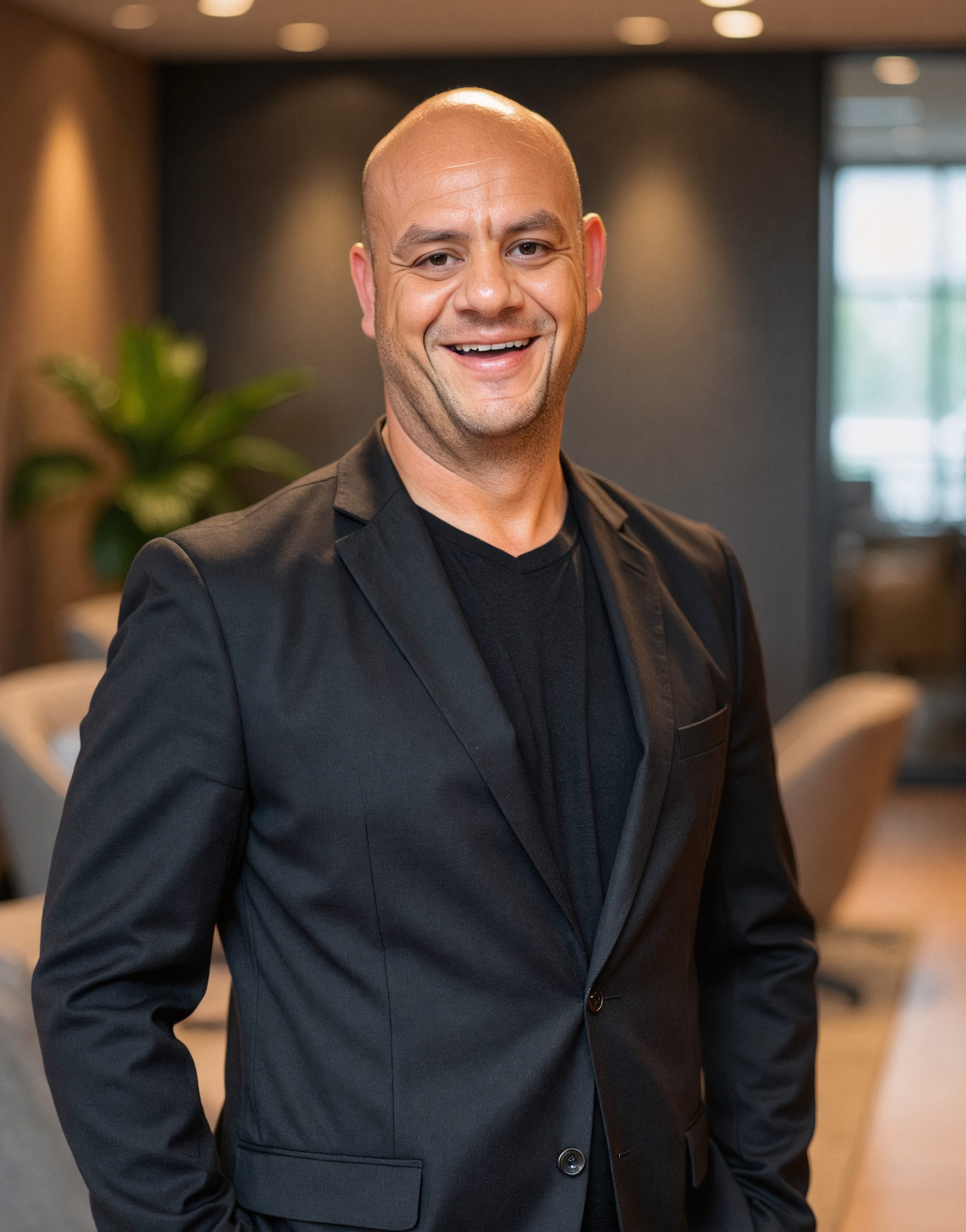
The Academy's curriculum exists because of a specific combination of experiences that's genuinely rare in healthcare.
Cory Geffre owned and operated multiple businesses before entering healthcare. He learned operations, margin, and staffing the way every business owner does. . . by living with the consequences of his decisions. He then became a clinician, which means he learned the language, the culture, and the pace of the floor from the inside. He continued owning businesses while rising through healthcare, moving from supervisor to manager to director to executive and eventually CNO. He has sat in every chair the Academy trains people for.
Most healthcare operations training fails because it's taught by people who only speak one of the two required languages. Finance leaders can explain margin but can't translate it into clinical terms. Clinical educators understand the floor but haven't run operations. Outside consultants bring frameworks built for general industry that don't survive contact with a hospital.
You can't teach an operator's skillset in a language the operator doesn't speak. The Academy is the only program we know of built from both sides of that gap.
The next Academy cohort is forming.
Be the first to know when enrollment opens.
The Operational Performance Academy is enrolled in defined windows, not continuously. Organizations are added as they're ready. . . and the first cohorts are intentionally small.
If you want visibility into when the next window opens. . . and a look at what the Academy install actually involves before you ever have a conversation. . . add your name below. You'll get the next cohort announcement directly, along with the short brief we send to interested organizations.
Product/Service

Service 1
Bullet List 1
Bullet List 2
Bullet List 3
Bullet List 4
Bullet List 5
$1000
Service 2
Bullet List 1
Bullet List 2
Bullet List 3
Bullet List 4
Bullet List 5
$1000
Service 3
Bullet List 1
Bullet List 2
Bullet List 3
Bullet List 4
Bullet List 5
$1000

© Operational Performance Partners, LLC
2026 All Rights Reserved.